Los Angeles Natural Mattresses | Support
Natural latex responds evenly across the sleep surface, helping support the shoulders, back, hips and legs without the rigid feel of an overly hard bed. Its buoyant construction can help keep the body comfortably aligned while reducing the sagging that often develops in conventional mattresses.
.jpg)
Los Angeles Natural Mattress | Comfort
The gently conforming feel of natural latex cushions the body while maintaining an uplifting, easy-to-move-on surface. Rather than sinking deeply, sleepers enjoy a balanced combination of softness, resilience and support that can remain comfortable throughout the night.
%20(1).jpg)
Natural Mattress Breathability
Natural latex has an open-cell structure that encourages airflow through the mattress. When paired with breathable cotton and wool, it helps release excess warmth and moisture, creating a fresher and more temperature-balanced sleeping environment in every season.
%20(2).jpg)
Whole Natural Los Angeles Mattress Pressure-Relief
Latex gently adapts to the body's shape and distributes weight across a wider area. This can reduce concentrated pressure around the shoulders and hips while maintaining dependable support, making it easier to settle into a comfortable position and stay there longer.

Toxin Free Natural Mattresses
A thoughtfully constructed natural mattress can reduce reliance on synthetic foams, harsh chemical odors and unnecessary additives. Natural latex, cotton and wool create a cleaner sleep surface for customers who want materials that feel wholesome, comfortable and carefully selected.

Natural Mattresses: Soft to Ultra Firm
Every sleeper has a different comfort preference. Natural latex mattresses can be designed in a broad range of firmness levels, from softly cushioning to exceptionally firm, allowing customers to select the feel that best matches their body type, sleep position and support needs.
.png)
Natural Mattress Customer Satisfaction
Customers appreciate a mattress that feels comfortable on the first night and continues performing for years. Responsive support, natural materials and multiple firmness choices help create a more personalized sleep experience and greater confidence in the purchase.
%20(1)%20(3).jpg)
Our Natural Mattresses Are Completely Reversible and Quilted on Both Sides
A two-sided mattress can be turned and rotated so wear is distributed more evenly. Quilting on both sides adds comfort and finished craftsmanship while giving customers the benefit of using the complete mattress rather than being limited to a single sleeping surface. THE ULTIMATE natural mattress delivers exceptional comfort by combining three Certified Organic layers of latex that work together to cradle, support, and rejuvenate your body. It features 3" of softer latex on both the top and bottom for luxurious comfort, and a 6" firmer latex core for stable, balanced support. You can customize THE ULTIMATE Natural Mattress to be as soft or as firm as you prefer—your personal combination is hand-built just for you

Our Natural Mattresses Have Handles and Zipper(s)
Strong side handles make rotating and positioning the mattress more convenient. Zippered construction can also provide access to internal comfort layers, depending on the model, making the mattress easier to inspect, adjust or maintain over time.
%20(1).jpg)
Natural Mattress Durability and Long-Term Value
High-quality natural latex is known for its resilience and ability to return to shape after repeated use. That durability can help a well-built mattress retain its comfort and support longer, providing value that extends well beyond the initial purchase.
.gif)
Natural Mattress Craftsmanship
Quality is found in the details: carefully selected latex, breathable cover
materials, sturdy stitching, finished edges and thoughtful layer construction.
Skilled craftsmanship helps ensure that every part of the mattress contributes
to comfort, support and lasting performance.
America's best price, quality, guarantee, service on 3-motor fully
electric high low adjustable beds
Ascend
| Flex-A-Bed
| Adjust-A-Beds
| Supernal
| Dawn
House
| Tuffcare
Here’s a one-line description for each of the top 3-motor fully electric high-low adjustable beds:
- Supernal by Transfer Master and Graham Field – A luxury homecare bed with full hi-low, Trendelenburg, and cardiac chair functions, blending hospital-grade features with elegant design.
- Dawn House Living by Ergomotion – A smart wellness bed with voice control, health monitoring, and high-low adjustability, designed for aging in place with style.
- Ascend Bed by Ergomotion – A sleek, tilt-enabled high-low bed with Zero-G, underbed lighting, and programmable presets for enhanced mobility and sleep quality.
- Tuffcare Century Bed – A robust long-term care bed with hi-low, Trendelenburg, and reverse Trendelenburg functions, ideal for clinical-grade support at home.
- Flex-A-Bed – A versatile, whisper-quiet adjustable base with head/foot lift, and 3 motor fully electric high-low features for customizable heights for the caregiver.
Please call for complete information and prices on all models: 800-551-2010.

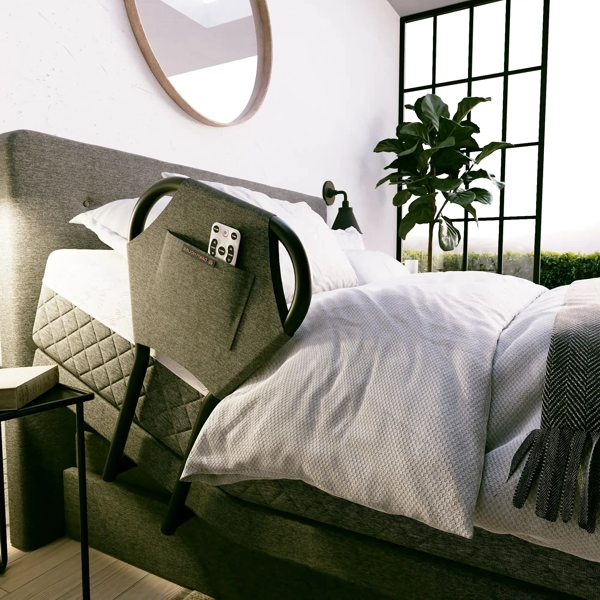
Los Angeles Natural Mattresses |Adjustable Beds
The flexibility and resilience of natural latex make it an excellent match for many electric adjustable bed bases. The mattress can bend with the moving foundation while continuing to provide consistent comfort, support and a smooth sleeping surface.